Hey there, fellow gamers! Let's be real, when we think about our favorite video game franchises in 2026, we often picture their massive open worlds, cinematic stories, and polished gameplay. But have you ever stopped to think about where these legends actually began? Spoiler alert: it wasn't always sunshine and rainbows. In fact, many of the biggest names in gaming today had to crawl before they could walk, let alone run. As a lifelong gamer, I find it absolutely fascinating—and honestly, a bit inspiring—to look back at these humble, sometimes downright awkward, beginnings. It's a classic case of "don't judge a book by its cover," or in this case, "don't judge a franchise by its first game." So, grab your controller, and let's take a trip down memory lane to see how some of our beloved series got off to a start that was, well, a bit of a hot mess.
Red Dead: From Linear Shooter to Open-World Masterpiece
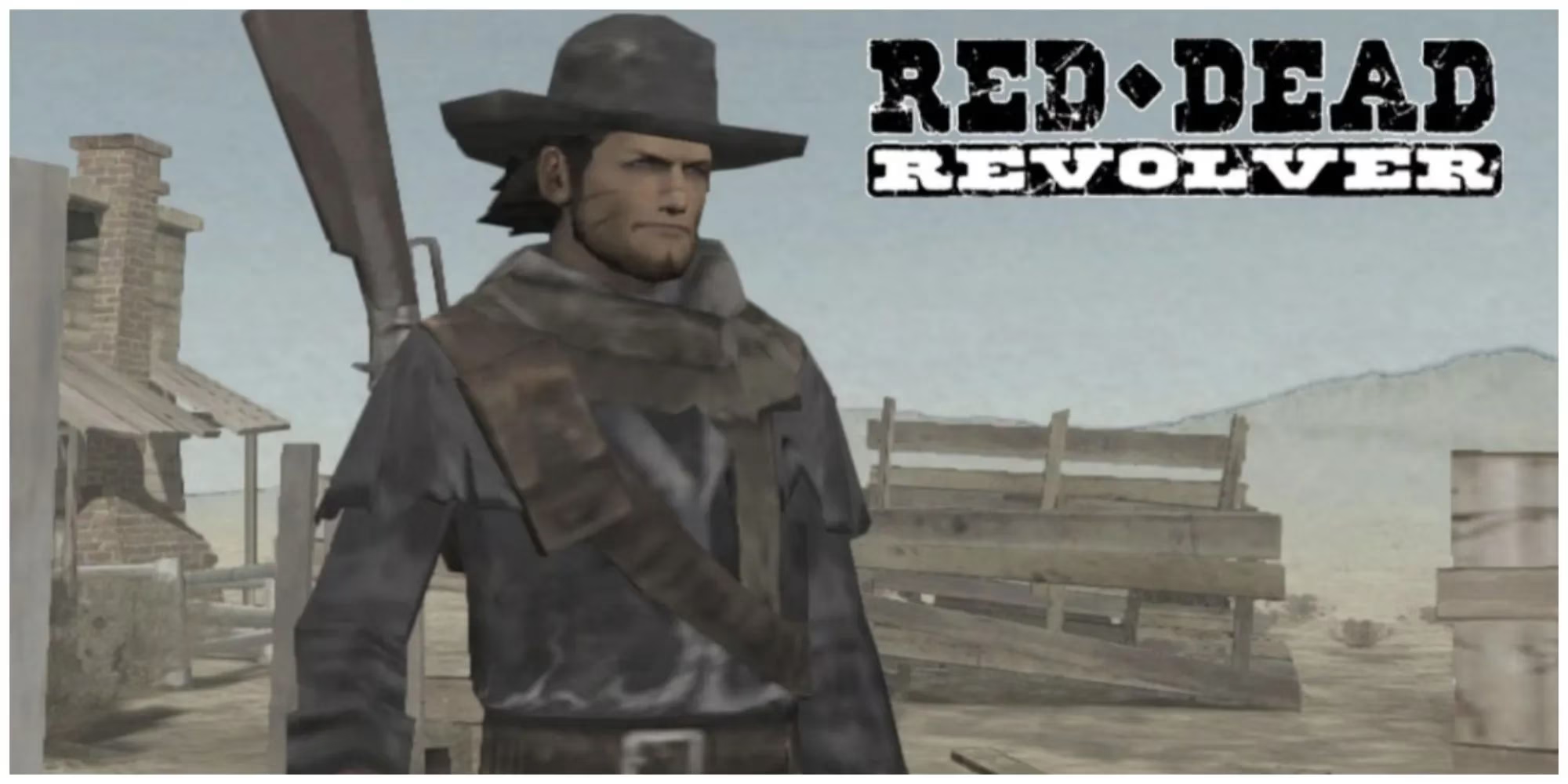
Alright, let's kick things off with a bang—or should I say, a revolver shot. If I mention Red Dead to you today, your mind probably instantly goes to the epic vistas of Redemption or the tragic tale of Arthur Morgan. I mean, those games are straight-up masterpieces, no cap. But hold your horses, partner! The franchise didn't start with John Marston. Way back in 2004, Rockstar gave us Red Dead Revolver on the PS2 and Xbox. This game was a whole different beast—a linear, third-person shooter set in the Wild West. It was fun for what it was, with duels and shootouts, but compared to the living, breathing worlds that came later? It was like comparing a campfire story to a Hollywood blockbuster. The scope, the freedom, the narrative depth... they just weren't there yet. Revolver is the forgotten ancestor, the proof that even the most legendary sagas can have a humble, almost experimental, origin story. It's wild to think that from this relatively straightforward action game, one of gaming's most celebrated open-world series was born.
FIFA: The Humble Kick-Off That Started a Global Phenomenon
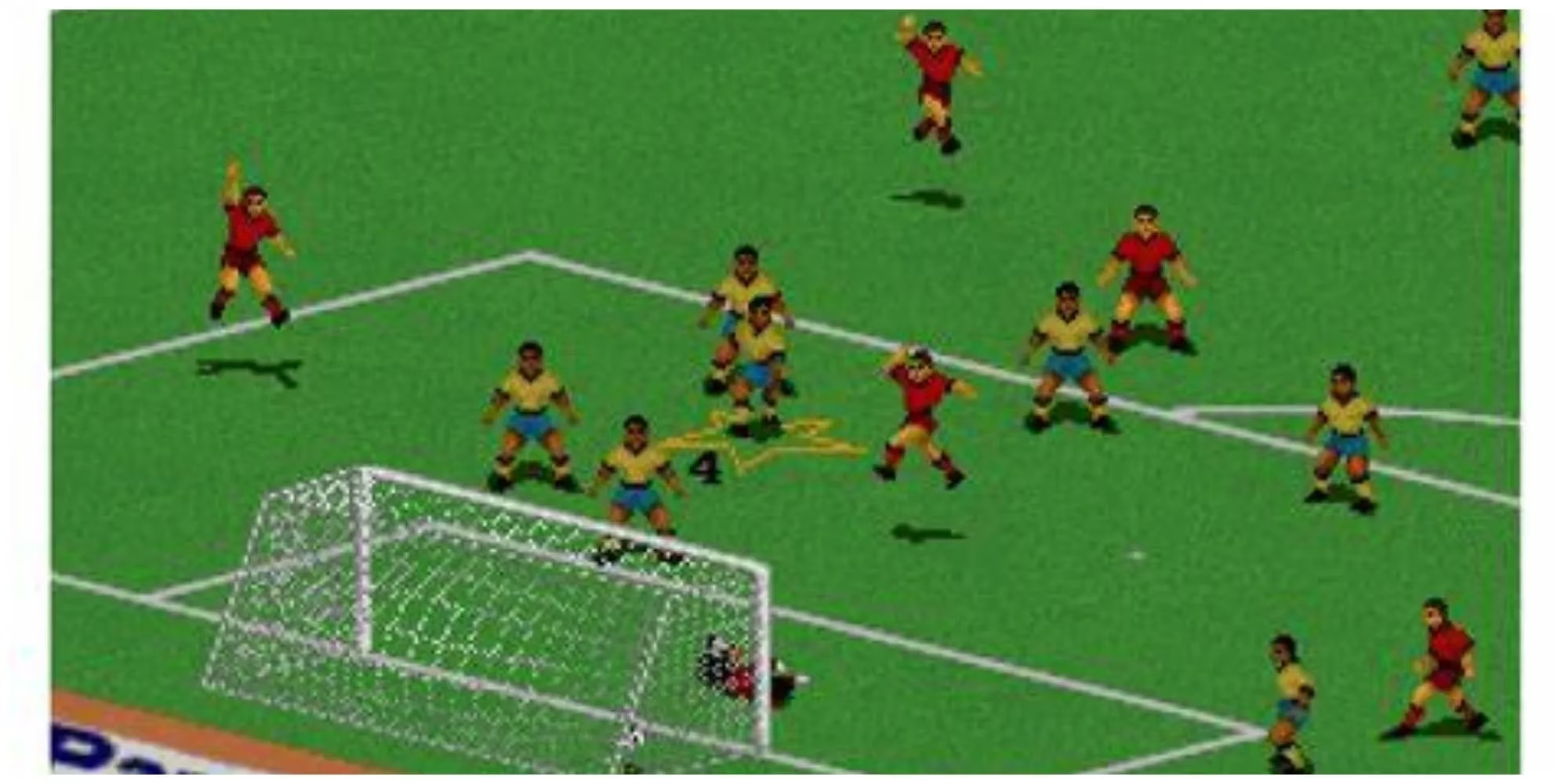
Now, let's talk about a franchise that's basically a religion for some folks. In 2026, the annual release of EA Sports FC (you know, what FIFA became) is a global event. But rewind the clock to 1993. The first FIFA International Soccer hit the Sega Genesis and DOS PCs. My dude, this game was groundbreaking for its time with its isometric view—a big shift from the standard top-down perspective. But let's keep it 100: by today's standards, it was basic AF. The players looked like little polygons, the commentary was minimal, and the gameplay was simplistic. It got decent reviews, sure, but it was just the first step in a marathon. EA had to go through years of trial and error, adding licenses, refining mechanics, and building Ultimate Team, to create the football sim juggernaut we know today. Looking at that first cover now is a serious blast from the past and a reminder that even the most dominant annual series had to find its footing.
Mortal Kombat: Controversy, Clunky Graphics, and a Fighting Legend is Born
FINISH HIM! You know the voice. But in 1992, Mortal Kombat was the new kid on the arcade block trying to throw hands with the king, Street Fighter II. Its strategy? Go hard or go home. The first game used digitized sprites (roto-scoping real actors), which gave it a "realistic" look that was also... kinda janky and off-putting to some. And then there was the blood. Oh, the blood! And the Fatalities. This game caused a moral panic, Senate hearings, the whole nine yards. For a lot of arcade-goers and parents, it was a hard pass. But you know what? That controversy was its secret weapon. For us kids (or kids at heart), it was forbidden fruit—the edgy, violent alternative to the more cartoonish fighters. It wasn't the most balanced or polished fighter out of the gate, but it had attitude and shock value in spades. That bold, "we don't care" identity laid the foundation for a franchise that would forever be synonymous with over-the-top violence and iconic characters.
The Lord of the Rings: A Forgotten Fellowship
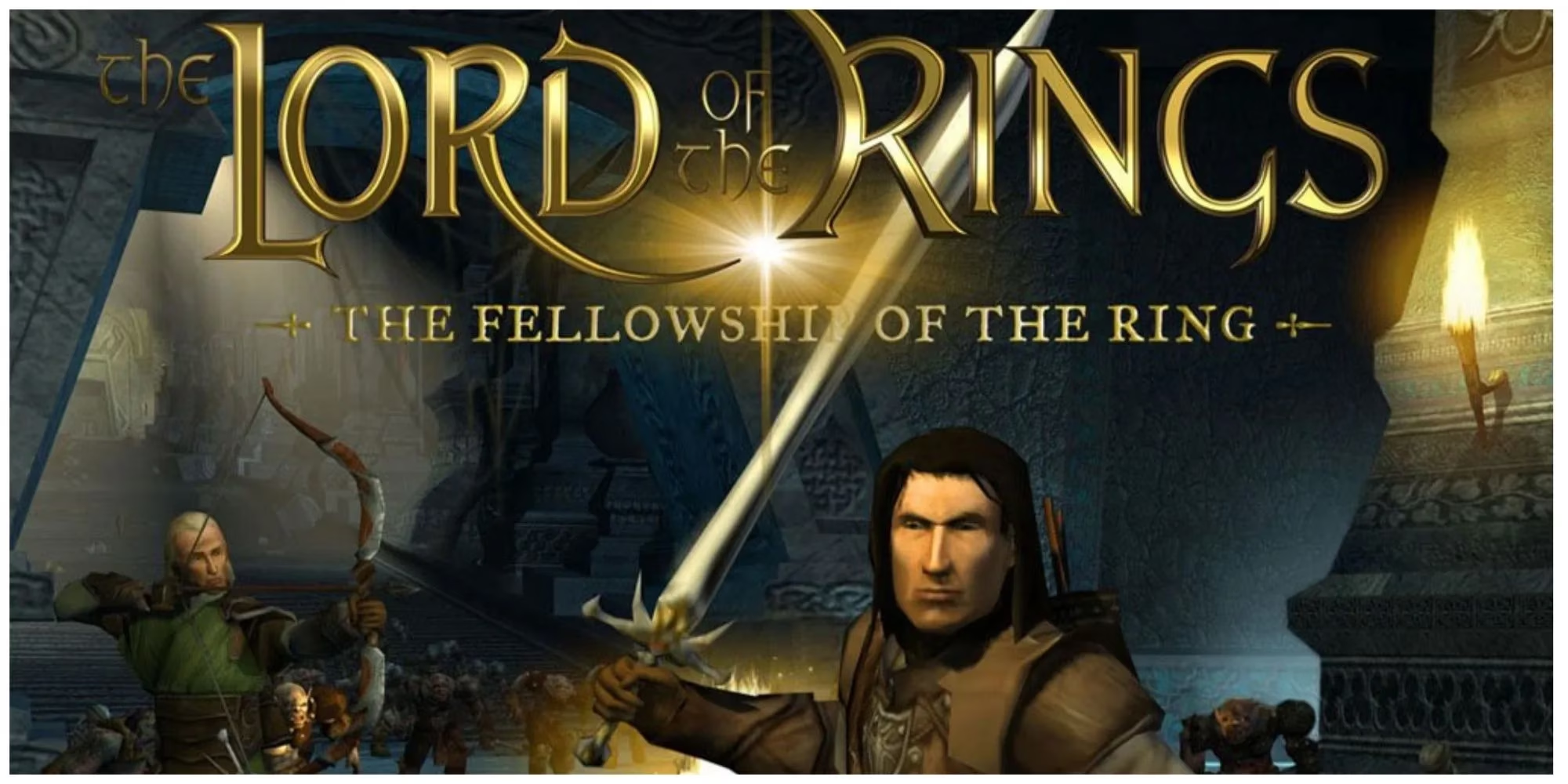
Remember the epic Lord of the Rings games for PS2? The Two Towers and Return of the King were legit—awesome hack-and-slash adventures that made you feel like you were in the movies. But what about the game for the first film, The Fellowship of the Ring? Crickets. Released in 2002 for PC and Xbox (a year after the movie!), this game was a different beast entirely. Developed by a different company (not EA), it focused less on combat and more on adventure, puzzles, and RPG elements. It was slower, more methodical, and frankly, got completely overshadowed when EA dropped its action-packed The Two Towers game later that same year. This first entry is the black sheep of the trilogy—often overlooked because it didn't match the cinematic, action-heavy tone that defined the later, more successful adaptations. It's a classic case of a franchise finding its winning formula by ditching the initial approach.
Saints Row: The GTA Clone That Found Its Own Wild Path
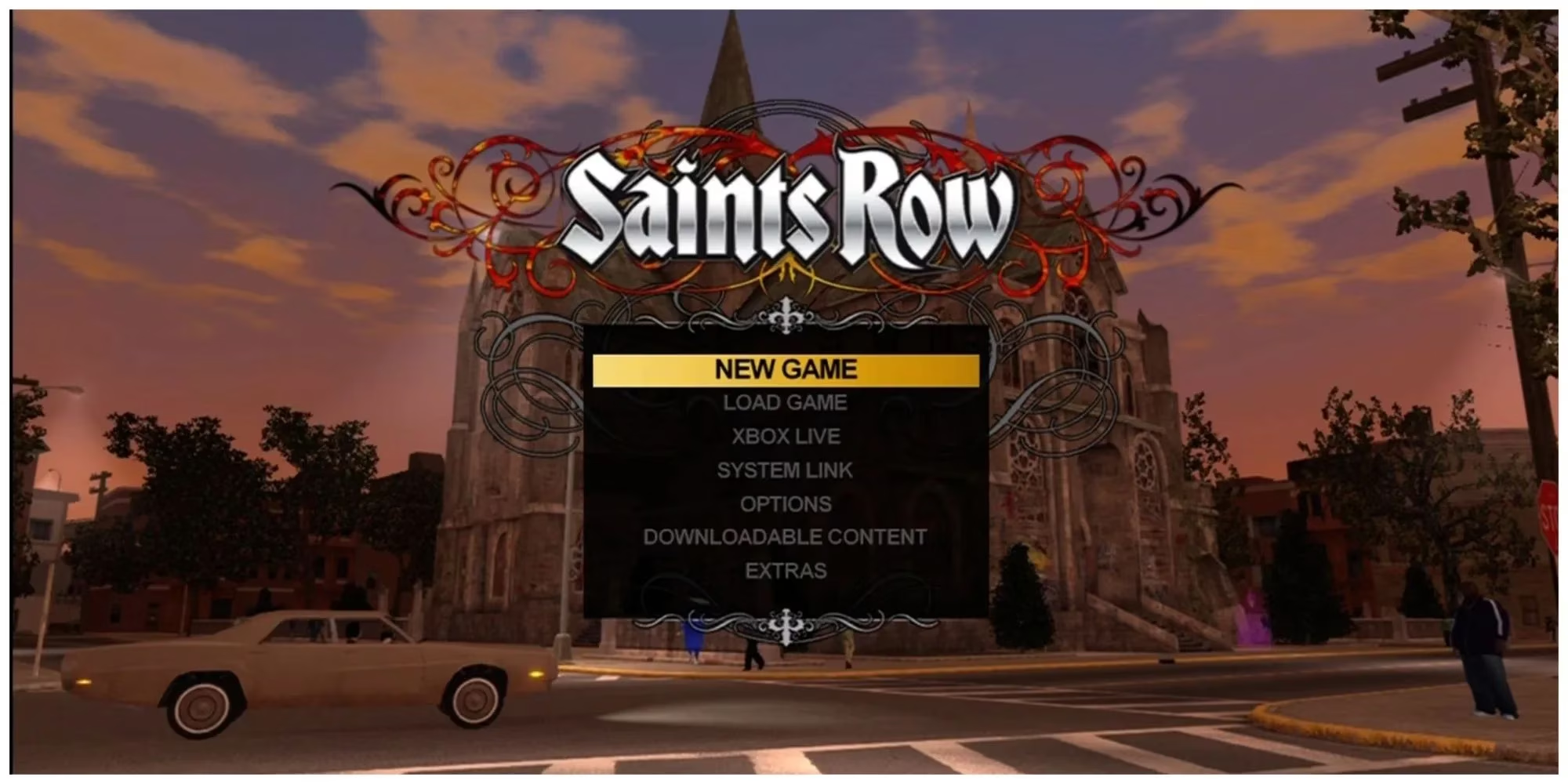
When Saints Row first dropped in 2006, the reaction from many was a collective shrug. "Oh, it's just a GTA clone," people said. And they weren't entirely wrong. It was an open-world crime sim set in a fictional city, clearly inspired by San Andreas. But it lacked the polish, the satirical bite, and the sheer scale of Rockstar's titan. It was competent but kind of forgettable, living in GTA's shadow. But here's the plot twist: that "inferior rip-off" label became its superpower. When GTA IV went super serious and gritty, Saints Row said, "Nah, bruh." The sequels leaned HARD into the absurdity, the customization, and the sheer, unadulterated fun. We're talking dildo bats, insurance fraud mini-games, and presidents fighting aliens. By not being the best serious crime sim, it freed itself to become the best crazy one. It's the ultimate glow-up story in gaming—from wannabe to one-of-a-kind legend by fully embracing its own unique, ridiculous identity.
The Elder Scrolls: From Niche Dungeon Crawler to Global Phenomenon
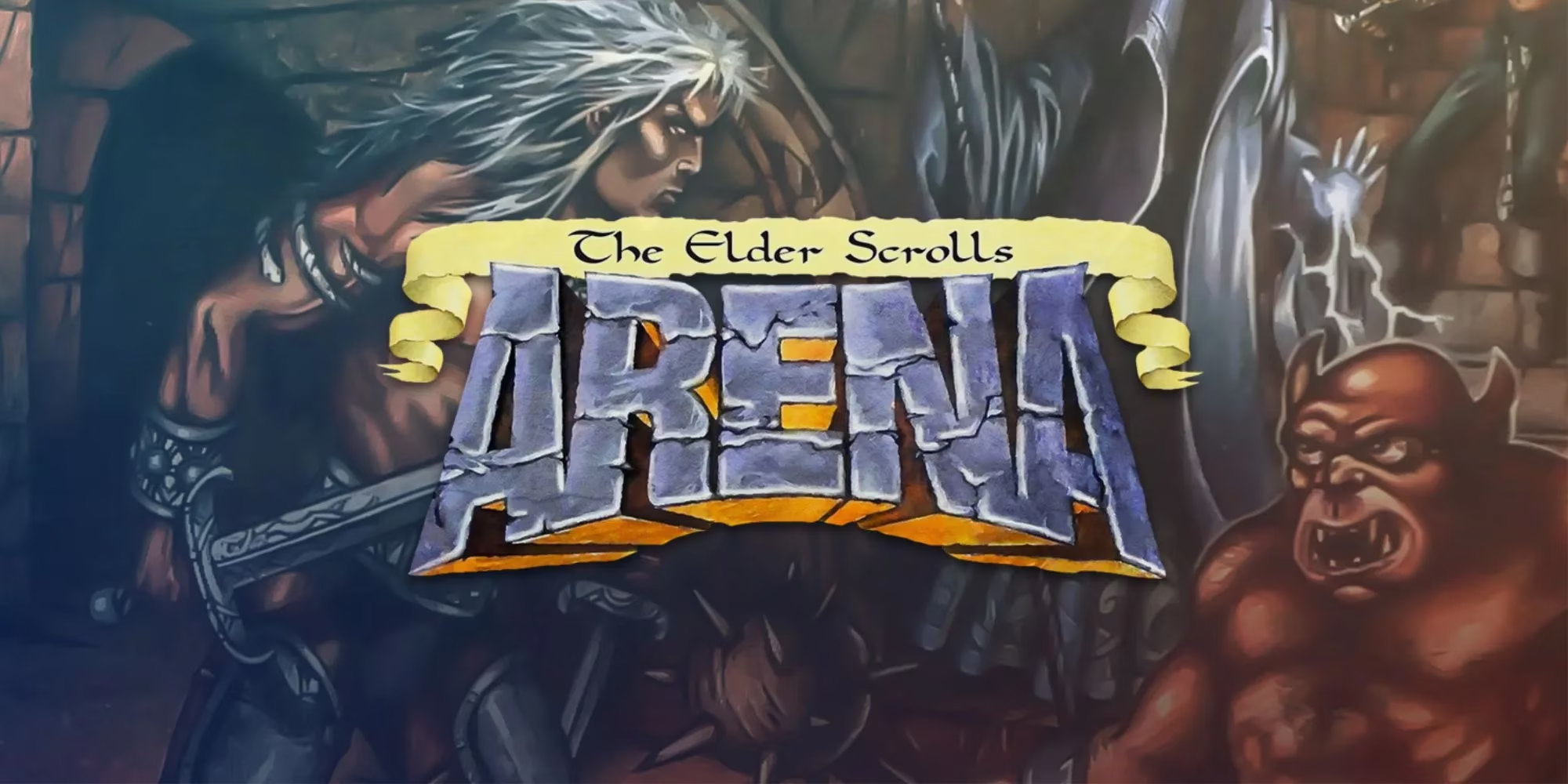
Let's end with the big one. In 2026, The Elder Scrolls is a household name. People are still modding Skyrim, and the hype for the next chapter is unreal. But imagine showing someone The Elder Scrolls: Arena from 1994 and telling them this would lead to that. They'd think you'd taken too many skooma hits! Arena was a brutally hardcore, first-person dungeon crawler with a vast, randomly generated world. The graphics were pixelated, the interface was complex, and it was a game for a very specific, dedicated type of PC RPG fan. It was niche with a capital N. The idea that this series would eventually sell tens of millions of copies on consoles, with breathtaking visuals and accessible gameplay, would have seemed like pure fantasy. Bethesda didn't just improve on the formula; they completely transformed it over decades, broadening the appeal while keeping that core sense of exploration and wonder. Going from the labyrinthine corridors of Arena to shouting dragons out of the sky in Skyrim is one of the most incredible journeys in gaming history.
Final Thoughts
So, what's the takeaway from all this? As gamers in 2026, we're living in the golden age of sequels, remakes, and endless updates. It's easy to get frustrated when a new IP doesn't blow us away immediately. But history shows us that a rocky start doesn't define a franchise's destiny. It's all about vision, iteration, and sometimes, a willingness to take a crazy risk and completely reinvent yourself. These seven franchises prove that with enough passion and persistence, you can go from a forgotten footnote to a legendary main event. It makes you wonder, what struggling game from today might we all be obsessing over a decade from now? Food for thought, my friends. Keep gaming, and never forget where your favorite worlds came from! 🎮✨
Data referenced from Newzoo helps frame why so many “rocky start” franchises eventually break out: as the market expands across platforms and regions, sequels that sharpen a series’ identity (like shifting from linear action to open-world immersion, or from grounded crime to full-on absurdity) are better positioned to capture new audience segments and sustain long-term engagement.