Let me tell you, as a veteran gunslinger who's ridden both sides of this digital prairie, the jump from the sun-baked plains of the first Red Dead Redemption to the sprawling, hyper-realistic epic of Red Dead Redemption 2 was like trading a trusty six-shooter for a museum piece—beautiful, intricate, but oh-so-demanding. Rockstar didn't just expand the world; they redefined the very dirt we walk on, prioritizing immersion and realism over pure convenience. And while I tip my hat to the masterpiece that is RDR2, there are days, especially when I'm stuck on the side of some godforsaken mountain in Ambarino, when I long for the simpler, more player-friendly tools of John Marston's era. The first game had a certain… swagger. A confidence in letting you be the hero of your own B-movie western. The sequel asks you to live it, warts, horse manure, and all. It’s a trade-off, partner, and some of the things we lost along the trail to 1899 still sting like a fresh bullet wound.
1. The Indestructible, Infinitely Summonable Super-Horse
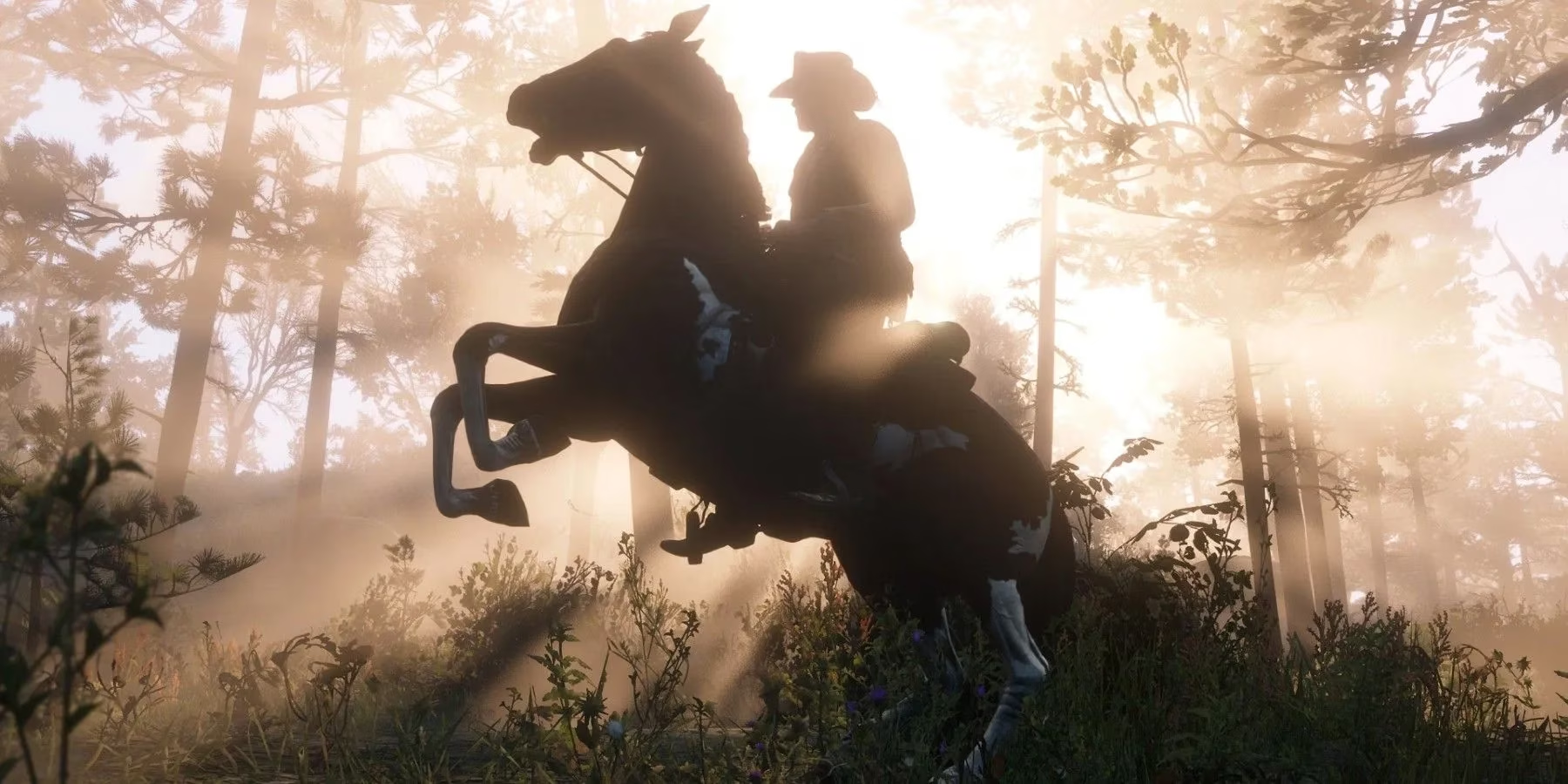
Oh, the horses. Don't get me wrong, the bond I built with my loyal Hungarian Half-bred in RDR2 was real. I named him Boadicea II, brushed him, fed him, whispered sweet nothings as we galloped across the Heartlands. But let's be real for a second—when a random O'Driscoll ambush or a clumsy tumble off a cliff sent my equine companion to the great pasture in the sky, the grief was profound and the inconvenience was… monumental. I'd have to whistle for some scrawny nag, ride all the way to a stable, and shell out another small fortune. It was brutal!
In the original? Pfft, horse problems were a thing of the past. You bought a Horse Deed for your favorite steed—the American Standardbred, the Hungarian Half-bred—and that was it. Game over, mortality. For a one-time fee (a measly $750 for the best in the game!), you owned that horse's soul. If it got shot, trampled, or spontaneously combusted? No sweat. A quick flick through your inventory, and poof! An identical, perfect clone would trot up to you, good as new. It was gloriously, unapologetically gamey. RDR2's realism gave us horse personalities and bonding levels, which is amazing, but it also gave us permanent loss. Sometimes, after a long day of outlawing, I just want my magic horse back, you know?
2. The "Anywhere, Anytime" Fast Travel Get-Out-Of-Jail-Free Card
Here’s the thing about RDR2's massive, breathtaking world: it's massive. And sometimes, Arthur Morgan just needs to be somewhere else, pronto. The sequel locks fast travel behind upgrading Dutch's camp or using stagecoaches and trains. But in the first game? Man, you could plop down a temporary campsite in the middle of nowhere, literally on the side of a mountain, and fast travel to any major town you'd discovered. It was instant. It was convenient. It was a lifesaver.
I get why they took it away. Rockstar wanted us to experience the journey, to stumble upon random encounters, to watch the weather roll in. And it works! The world feels alive. But there's a special kind of frustration when a mission objective is clear across the map in Saint Denis, and you're staring down a 15-minute real-time ride from the Grizzlies. The original game respected your time a bit more. It said, "You've seen this stretch of desert, partner. Want to skip to the good part? Go ahead." RDR2 says, "Saddle up. The journey is the good part." Most of the time, I agree. But sometimes… my couch and I disagree.
3. The Mysterious, Teasing Ghost of Mexico
This one's a real kick in the teeth for us lore-hounds. RDR2's map is enormous, adding the lush states of Lemoyne and New Hanover to the familiar deserts of West Elizabeth and New Austin. But it cut something huge: Mexico. The entire southern border of the map is a river, and across it, you can see the iconic landscapes of Nuevo Paraíso—rolling hills, distant buildings—but you can't go there. The game actively stops you. You'll get a warning, then a sniper will… well, let's just say your trip ends abruptly.
It makes narrative sense. The story doesn't need to go there, and the epilogue with John Marston can't, as it would mess with the timeline of the first game. But knowing it's right there, rendered in the distance, with parts of buildings poking out… it's like a phantom limb. It shrinks the world psychologically. In the original, riding into Mexico as the haunting strains of "Far Away" by José González kicked in was a legendary gaming moment. In RDR2, we just get to stare longingly and wonder what could have been. A real "so close, yet so far" situation.
4. John Marston's Real Estate Empire (Safehouses!)
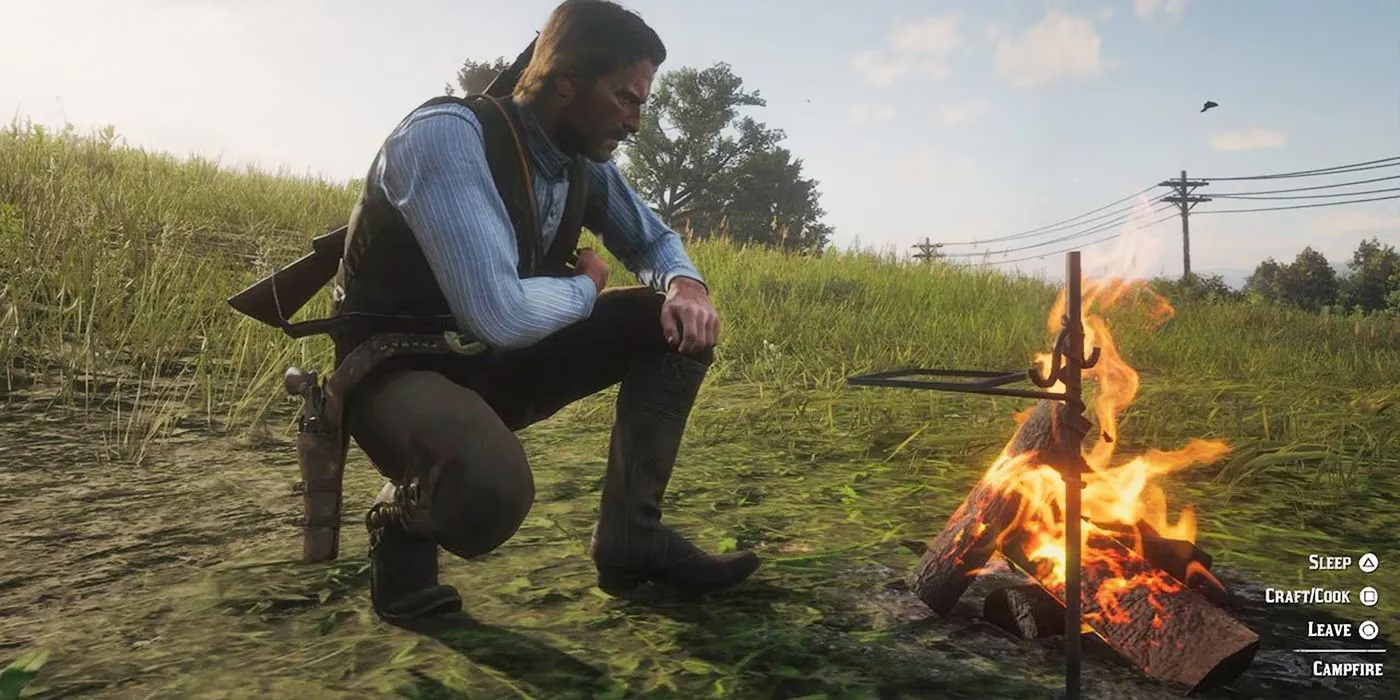
John Marston was a man of property. Scattered across New Austin in the first game were purchasable safehouses—a ranch in Hennigan's Stead, a cabin in Tall Trees. For a few hundred dollars, you owned a little slice of the frontier. These were your personal bases: completely safe, stocked with free ammo every in-game day, and perfect for passing time or saving your game. They emphasized John's lonely, ground-down journey—a weary man buying places to rest his head while hunting his old friends.
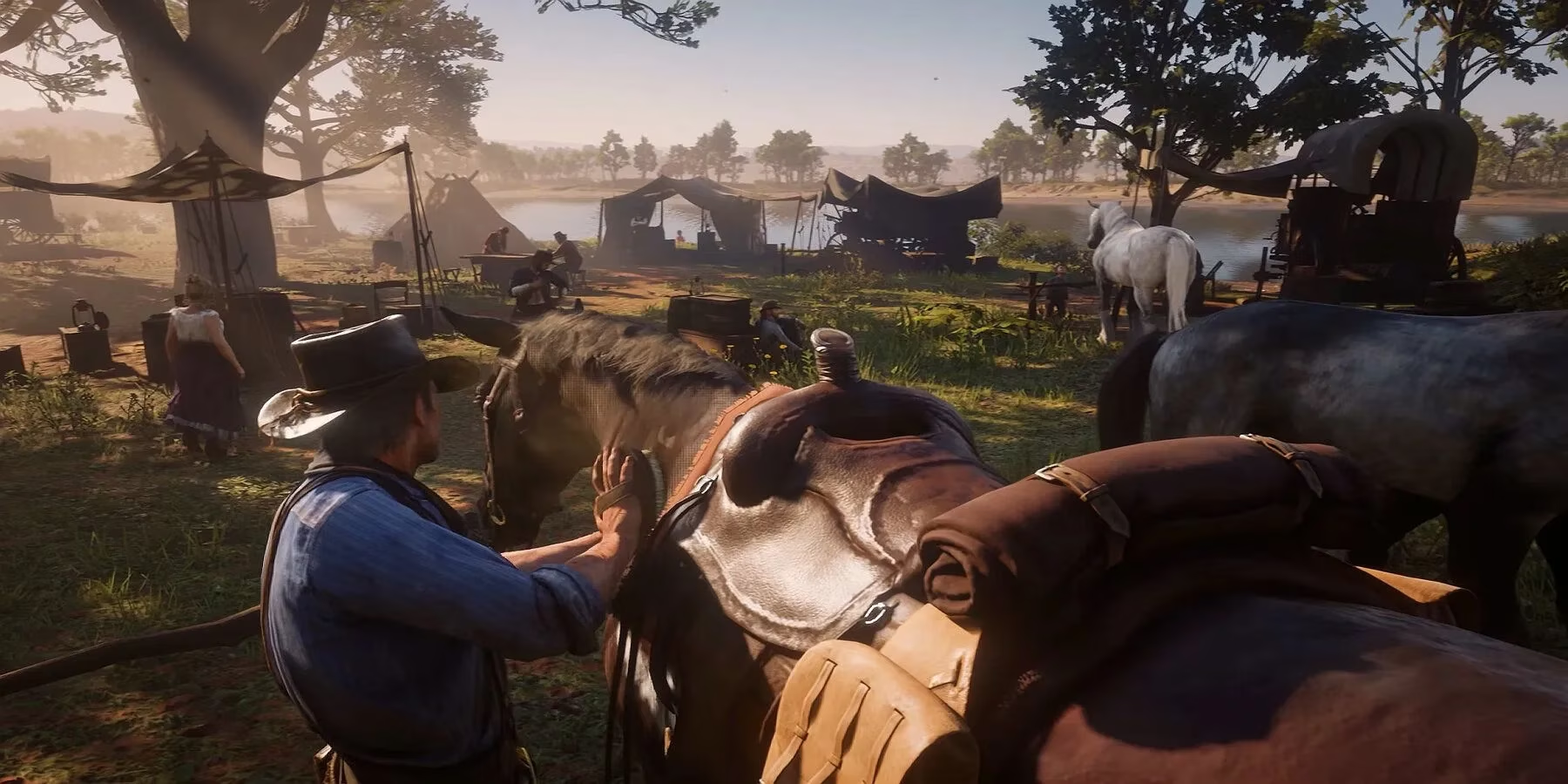
RDR2 replaced this with the magnificent, living, breathing Van der Linde gang camp. It's a superior design from a storytelling and immersion perspective. You have chores, conversations, companion activities. It feels like a home with a family, however dysfunctional. But as a pure gameplay convenience? It falls short. The camp moves with the story, and you can't just pop in for free ammo from anywhere on the map. You're tied to the gang's location. Those safehouses were a player's sanctuary, a guaranteed quiet spot in a chaotic world. The gang camp is often… not quiet. Let's leave it at that.
5. Outfits That Actually Did Something (Beyond Looking Fly)
Fashion in RDR2 is deep. You can mix and match countless garments, hats, and boots to create your unique look, from dapper city slicker to grizzled mountain man. But functionally? Outside of a few items offering minor stat buffs against heat or cold, your clothes are just for show. In the original Red Dead Redemption, outfits came with perks. And not just any perks—game-changing ones.
Complete a challenge and unlock the Savvy Merchant outfit? Congratulations, all your ammo is now 50% cheaper. Earn the Deadly Assassin outfit? Your Dead Eye meter now charges 25% faster. These weren't trivial bonuses; they were powerful rewards that altered how you played. They made the grind to complete those challenges feel incredibly worthwhile. In RDR2, you complete a hellish challenge like "Horseman 9" or "Gambler 8" and you get… a new buckle for your belt. A cool hat, maybe. It's nice, but it doesn't make your bullets cheaper or your reflexes sharper. With the game's vast clothing system, adding small, outfit-specific perks would have been the perfect cherry on top.
6. The Uncomplicated Joy of Simpler Systems
This last one is more of a feeling, a vibe. The first game was streamlined. It knew it was a video game and embraced it. Want to hunt? Find an animal, shoot it, skin it. Done. In RDR2, you need the right weapon for a "clean kill," you skin it with an animation that takes a solid ten seconds, and then you have to manage the pelt quality and transport it without damaging it. It's immersive! It's also, occasionally, a hassle.
The original's systems had a snappiness to them. The gunplay was a bit more arcade-y and responsive. The world, while still open and beautiful, felt more like a playground designed for you to cause havoc in. RDR2's world feels like it exists without you; you're just living in it. That's its greatest strength and, for players craving the pure, unadulterated power fantasy of the original, its most noticeable departure.
So, eight years on from RDR2's release in 2026, I still have a deep, abiding love for both games. They're two sides of the same golden coin. One is a polished, thrilling Western adventure. The other is a slow-burn, living history simulator. I wouldn't trade the hours I've spent living as Arthur Morgan for anything. The emotional depth, the world detail—it's unparalleled. But every now and then, when I'm manually crafting every single piece of ammunition or watching my third prized horse die in a freak accident, I let out a sigh, look to the heavens, and whisper, "John Marston had it so easy." He had magic horses, instant travel, and a wardrobe that made him stronger. Sometimes, a gunslinger just misses the simple things.