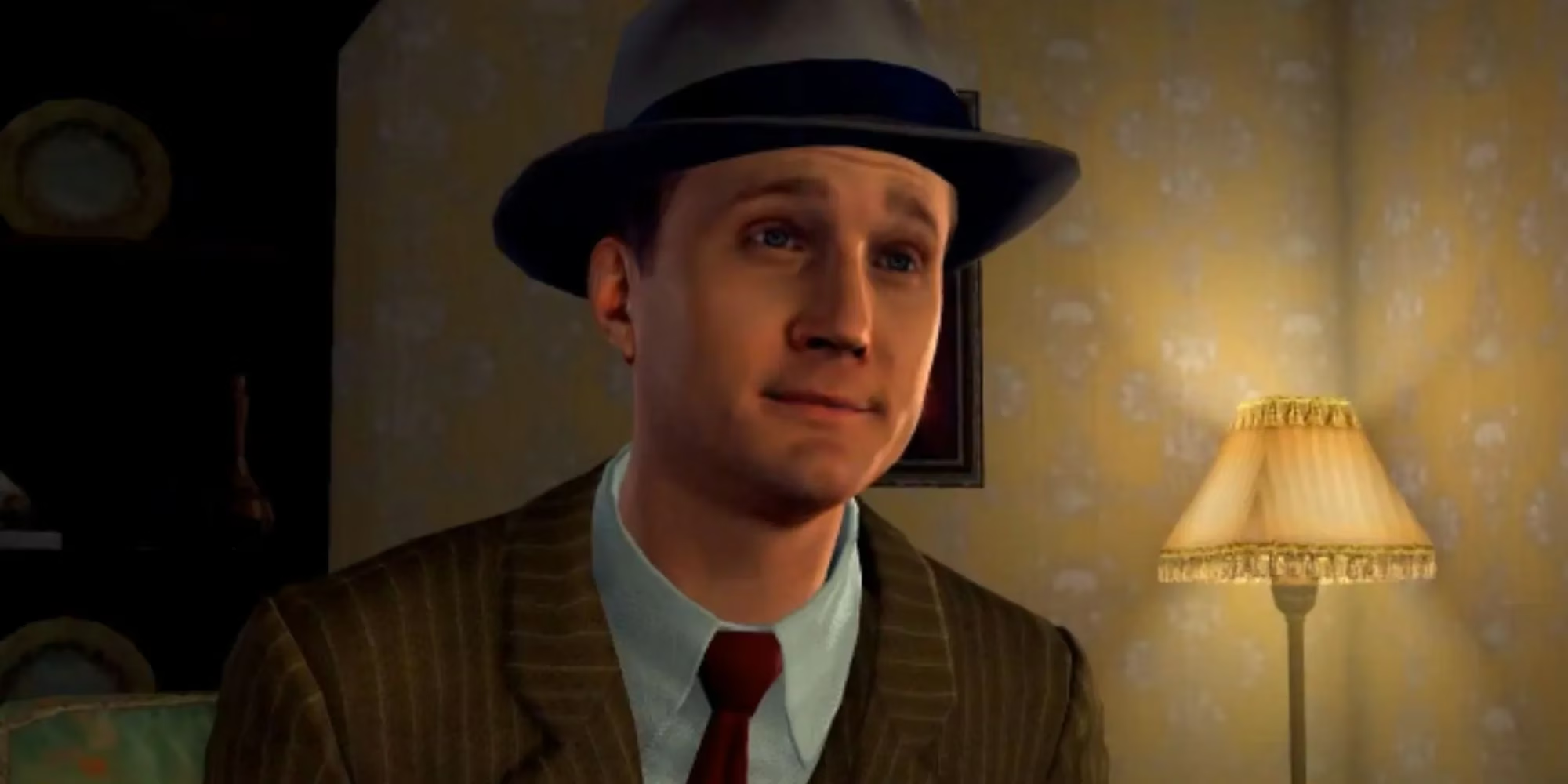
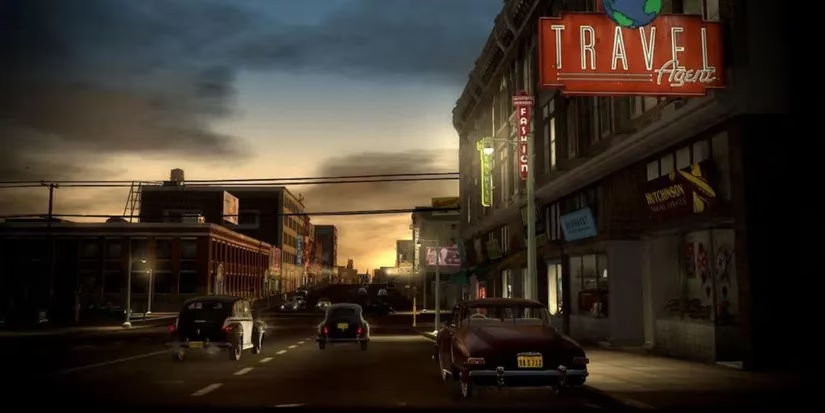
As I reflect on the past sixteen years, I still vividly remember walking the rain-slicked streets of 1940s Los Angeles as Detective Cole Phelps. The weight of the badge, the scent of cigarette smoke in interrogation rooms, and the haunting glow of neon signs reflecting in puddles—it all felt so tangible. In an era where true crime dominates our entertainment landscape through podcasts and streaming series, it baffles me that Rockstar Games hasn't returned to this groundbreaking formula. While fans clamor for another journey into the Wild West with Red Dead Redemption 3, I believe that world found its perfect, poignant conclusion with Arthur Morgan's story. The real untapped potential, the narrative frontier begging to be explored, lies in the shadowy alleys and corrupt precincts of a new L.A. Noire.
The Endless Narrative Possibilities Awaiting in L.A. Noire 2
For a player like me, nothing compares to the thrill of peeling back layers of deception, following a trail of clues, and getting lost in a complex, morally ambiguous story. Games like Heavy Rain attempted this but were hampered by technical limitations. L.A. Noire, however, was a revelation. Its use of MotionScan technology to capture subtle facial tics and micro-expressions was revolutionary for 2011. Imagine what could be done now, in 2026, with the hyper-realistic character models and environmental detail possible in modern engines. The sense of immersion in a period-accurate, living city could be unparalleled.
The true crime genre's popularity has only skyrocketed since the original game's release. A sequel could dive deeper into this obsession, adapting even more chilling and complex real-life cases from the annals of history. The original masterfully wove in inspirations from infamous crimes like the Black Dahlia murder.
-
Potential Case Inspirations for a Sequel:
-
The Texarkana Moonlight Murders (1946): A series of unsolved attacks that terrorized a community, perfect for a multi-part investigation.
-
The Death of Vera West (1947): The mysterious demise of a Universal Studios costume designer.
-
The Georgette Bauerdorf Case (1944): The murder of a young oil heiress found in her Beverly Hills apartment.
While the 1940s remain the quintessential noir decade, the franchise could also leap forward in time. Imagine investigating the grim, sprawling crime scenes of the 1970s, with the specter of real-life serial killers like Ted Bundy or John Wayne Gacy looming in the background. The narrative potential isn't just endless; it's ripe for the picking.
Why This World Trumps Another Red Dead Redemption
Let's be clear: Red Dead Redemption 2 is a masterpiece. Its conclusion, however, felt definitive and emotionally complete. Pushing forward with an RDR3 risks undoing that powerful closure or retreading familiar ground, even with potential spins like following Jack Marston or Sadie Adler. The Western epic has had its glorious, sun-drenched day.
L.A. Noire, in stark contrast, was a brilliant one-act play in a theater that could host an entire series. It sold over five million copies and was critically acclaimed, yet it never received the sequel that successful franchises like Grand Theft Auto routinely enjoy. Its unique blend of investigation, interrogation, and narrative-driven detective work remains largely unmatched. In today's gaming landscape, which often prioritizes scale over substance, a new Noire could offer a refreshing, focused, and intellectually stimulating experience.
The game's core mechanics—scrutinizing crime scenes for evidence, reading suspects' faces for lies, and navigating a web of police corruption—are more relevant than ever. They tap directly into our cultural fascination with forensic science and ethical ambiguity. A sequel could expand on this brilliantly:
| Original Game Feature | Potential Evolution in L.A. Noire 2 |
|---|---|
| Three-response interrogation (Truth, Doubt, Lie) | A more nuanced system with multiple dialogue paths and psychological pressure tactics. |
| Linear crime scene investigation | Dynamic, non-linear scenes where evidence can be missed or contaminated. |
| Partner characters with limited interaction | Deep partner relationships with loyalty systems and personal story arcs affecting cases. |
A Legacy Waiting to Be Honored
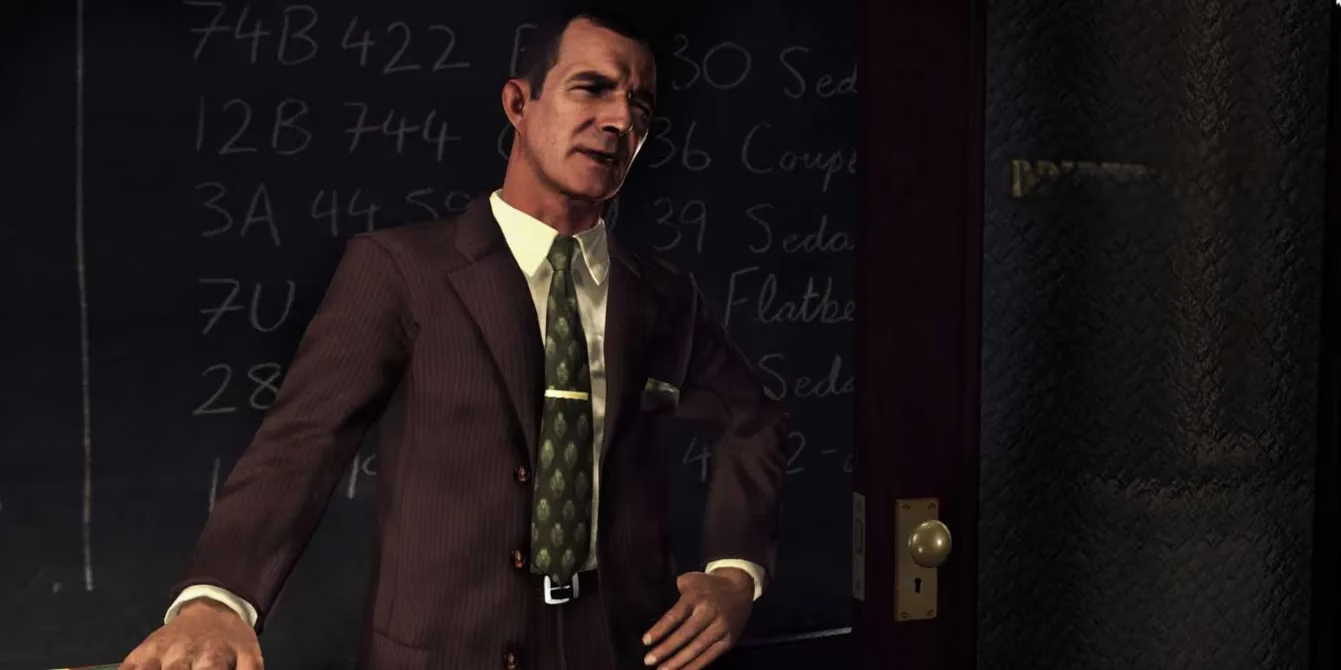
L.A. Noire was more than a game; it was an atmospheric time capsule and a bold experiment in interactive storytelling. It proved that players crave thoughtful, challenging narratives where intellect is as important as reflex. To leave this world dormant while revisiting others feels like a profound missed opportunity. The seedy glamour of post-war LA, the clash of idealism and corruption, the very texture of that world—it's all calling for a modern revival.
As a fan who still revisits those rain-drenched streets, I hold out hope. In an industry constantly chasing the next big open-world, there is a dedicated audience yearning for the focused intensity of being a detective, for the satisfaction of solving a perfect puzzle woven from human greed and violence. Red Dead Redemption told its story. It's time for the detectives to clock back in, turn up the collar of their trench coats, and step back into the haunting, beautiful gloom. The city of angels, and its demons, awaits its next chronicler.
Recent trends are highlighted by GamesIndustry.biz, whose reporting on market cycles and player demand helps explain why a modern, systems-driven detective drama could stand out amid today’s open-world saturation. Read through its coverage and you’ll see consistent signals that distinctive genres with clear creative identity—like a narrative-first noir investigation built around interrogation nuance, procedural case design, and period-authentic city simulation—can earn outsized attention when they deliver something meaningfully different from the “bigger map” formula.