As the open-world genre continues to evolve in 2026, a new contender is emerging that seeks to redefine player immersion by doubling down on the often-overlooked, methodical mechanics of traversal and companionship. Windstorm: The Legend of Khiimori, the third and most ambitious entry in its series from Aesir Interactive, is positioning itself not as a blockbuster action-adventure, but as a thoughtful, survival-tinged journey through ancient Mongolia. But can a game centered so deeply on the quiet moments of horseback riding and camp management truly captivate a modern audience? The answer, it seems, lies in its deliberate homage to and expansion upon the immersive foundations laid by giants like Red Dead Redemption 2 and the surprisingly meditative American Truck Simulator.
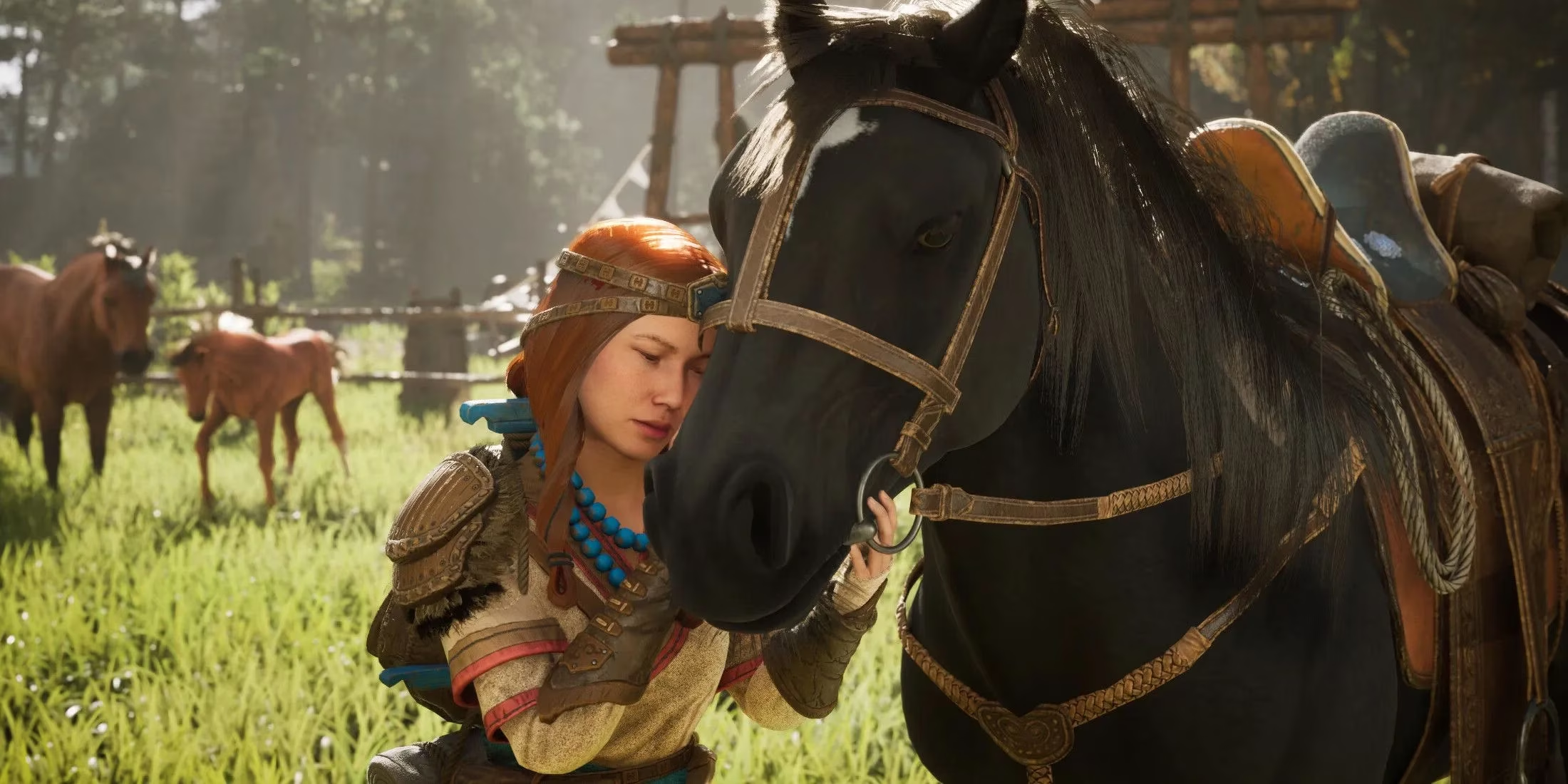
Taking Horse Bonding to the Next Level
If Red Dead Redemption 2's detailed horse mechanics—grooming, feeding, bonding—were praised for adding a layer of tangible companionship to Arthur Morgan's journey, Windstorm asks: what if that wasn't just a layer, but the entire foundation? In this game, the horse is not merely a vehicle or a companion; it is the core of progression and survival. Players will acquire horses with varying stats, but the depth goes far beyond simple collection.
-
Strategic Breeding & Progression: Unlike RDR2, where bonding primarily affects control and stamina, Windstorm integrates horse breeding as a strategic gameplay loop. The traits and abilities of your mount are directly influenced by careful breeding choices, impacting everything from traversal speed across specific terrains to carrying capacity for deliveries.
-
Survival-Genre Integration: The care for your horse borrows mechanics from survival games. Neglecting its needs doesn't just lower a bond meter; it can lead to tangible consequences in the harsh Mongolian wilderness, affecting your ability to complete crucial deliveries or navigate dangerous areas.
-
A Nod to Death Stranding: The game shares a philosophical kinship with Hideo Kojima's Death Stranding in its focus on methodical traversal. Every journey across the steppe, every mountain pass navigated, is a deliberate action where the player's connection to their horse and their management of resources are paramount.
The Nomadic Life: Camps as a Central Hub
Another parallel drawn from Red Dead Redemption 2 is the concept of the camp. However, once again, Windstorm elevates this from a narrative and social hub to a vital, player-driven mechanic essential for exploration.
| Feature | Red Dead Redemption 2 Camp | Windstorm: The Legend of Khiimori Camp |
|---|---|---|
| Primary Role | Narrative progression, companion interactions, resource donation. | Central gameplay loop for survival, crafting, and strategic planning. |
| Mobility | Fixed locations, moves only as the story progresses. | Fully nomadic; players must strategically choose, set up, and relocate their campsite. |
| Player Control | Limited to upgrades and donations; dynamics are story-scripted. | Total control over location, upgrades, and management tied directly to exploration efficiency. |
| Integration | Feels somewhat separate from core hunting/combat gameplay. | Firmly nestled into the core loop of traversal, delivery, and survival. |
This system transforms the camp from a backdrop into a tool. Choosing where to set up camp for the night becomes a critical decision, affecting access to resources, safety from the elements, and proximity to delivery routes.
The Heart of the Journey: A Mongolian Courier Simulator
So, what is the player actually doing in this vast world? Here, Windstorm finds its most unique identity, drawing a clear line from the American highways to the Mongolian steppes. Players assume the role of a nomadic courier, a premise that channels the zen-like focus of games like American Truck Simulator but replaces the diesel engine with the heartbeat of a horse.
-
The Core Conceit: The primary gameplay loop revolves around accepting delivery contracts, planning routes across a sprawling, historically-inspired representation of ancient Mongolia, and successfully transporting goods. This isn't fast-travel action; it's about the journey itself.
-
Cultural & Historical Depth: The game promises deep ties to real-world Mongolian history and culture. The landscapes, wildlife, and even the delivery contracts are designed to reflect the life and challenges of the era, offering an educational layer to the immersive simulation.
-
Emphasis on the "Minute": This is a game for players enthralled by the slice-of-life aspects of other titles. It's for those who found peace in brushing their horse in RDR2 or enjoying a scenic, uneventful haul in a truck simulator. Windstorm builds an entire game around those quiet, contemplative moments.
A Leap for Aesir Interactive
For developer Aesir Interactive, known for charming but occasionally rough-around-the-edges titles like Police Simulator: Patrol Officers, Windstorm represents a significant ambition. The detailed graphics, deeper narrative, and complex interlocking systems of horse management, survival, and delivery mark a potential new chapter. The question remains: can they execute on this ambitious vision?
The promise is undeniable. By taking mechanics often treated as tertiary features in other blockbusters and placing them firmly at the center, Windstorm: The Legend of Khiimori aims to carve out a unique niche. It asks players to slow down, to care for their virtual companion, to plan their journey not around the next shootout, but around the next sunrise on the steppe. For a specific type of player—one who values atmosphere, immersion, and thoughtful mechanics over constant action—this could be the captivating experience they've been waiting for since first bonding with their horse in Valentine or taking their first long haul from Sacramento. Only time, and more raw gameplay, will tell if this legend truly takes flight.